

For covered crop growers, heating decisions come down to three things: will it keep the crop at the right temperature, can you rely on consistent fuel supply through winter, and does the cost stack up against other options. The system also has to suit the site and remain practical to manage day to day.
At their property in Te Puna, about 15 minutes north of Tauranga, Ed and Lyn Paul use wood pellet greenhouse heating to keep their winter tomato house productive. Their setup offers a useful example for NZ growers considering alternative fuel options, particularly those wanting to understand what pellet heating looks like day to day.
The property has three greenhouses. Two are now retired, while the winter house continues to produce tomatoes for the Tauranga Farmers’ Market.
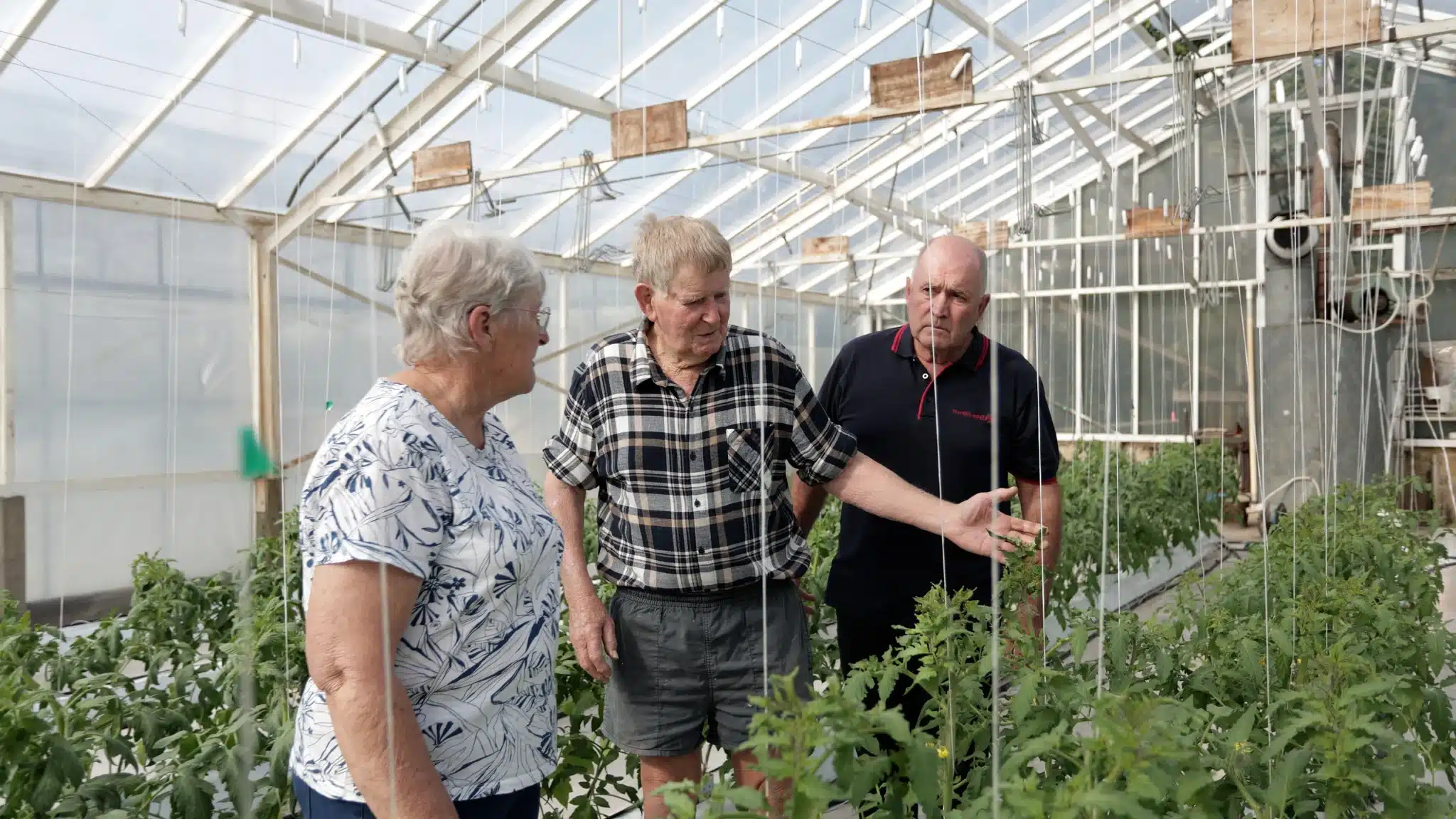
The Challenge: Heating a Winter Tomato Greenhouse
Ed and Lyn needed reliable winter heat for a productive tomato greenhouse. Their winter house has 800 tomato plants and produces around 300 kg of tomatoes per week along with a smaller number of other greenhouse crops like cucumbers and eggplants, these are then sold at the Tauranga Farmers’ Market every winter weekend.
The winter house covers approximately 300m². For growers sizing a similar system, it is worth noting that ridge height matters as much as floor area, because a taller structure holds significantly more air volume and will require greater heat output.
For growers looking at alternative energy options, this is often the starting point: can the system maintain the conditions the crop needs?
In this case, the system keeps the glasshouse at around 18 to 19 degrees C over winter. That level of consistency matters, because the heating system is directly tied to crop performance, market supply and daily management.
The setup also needed to suit the existing greenhouse layout. The boiler is positioned at the back of the glasshouse, which influences how pellets are stored, moved and managed on site.
The Solution: Converting an Existing Boiler to Run on Wood Pellets
Rather than installing a completely new boiler, Ed converted a 1985 Beacon coal boiler to run on wood pellets. That detail is useful for other growers because one of the first questions is often whether a system needs to be replaced entirely, or whether existing equipment can be adapted.
The Pauls have been Nature’s Flame customers since 2011, and the pellet handling setup has changed over time. Pellets were originally supplied in 1-tonne bags. The system now uses a modified silo, allowing pellets to be delivered by blower truck.
Pellet Storage and Delivery
Because the boiler sits at the back of the glasshouse, pellets are transferred from the silo to the boiler by tractor. For other growers, this highlights the importance of planning the full setup, not just the fuel source. Storage location, delivery access and the distance between the silo and boiler all affect how practical the system will be.
Day-to-Day Operation of Wood Pellet Greenhouse Heating
The day-to-day operation is practical and hands-on. Pellets are stored in the silo and fuel levels are checked manually. From there, pellets are moved by tractor to the boiler. This works for the Pauls’ site, but it also shows why each greenhouse needs its own layout assessment before making a switch.
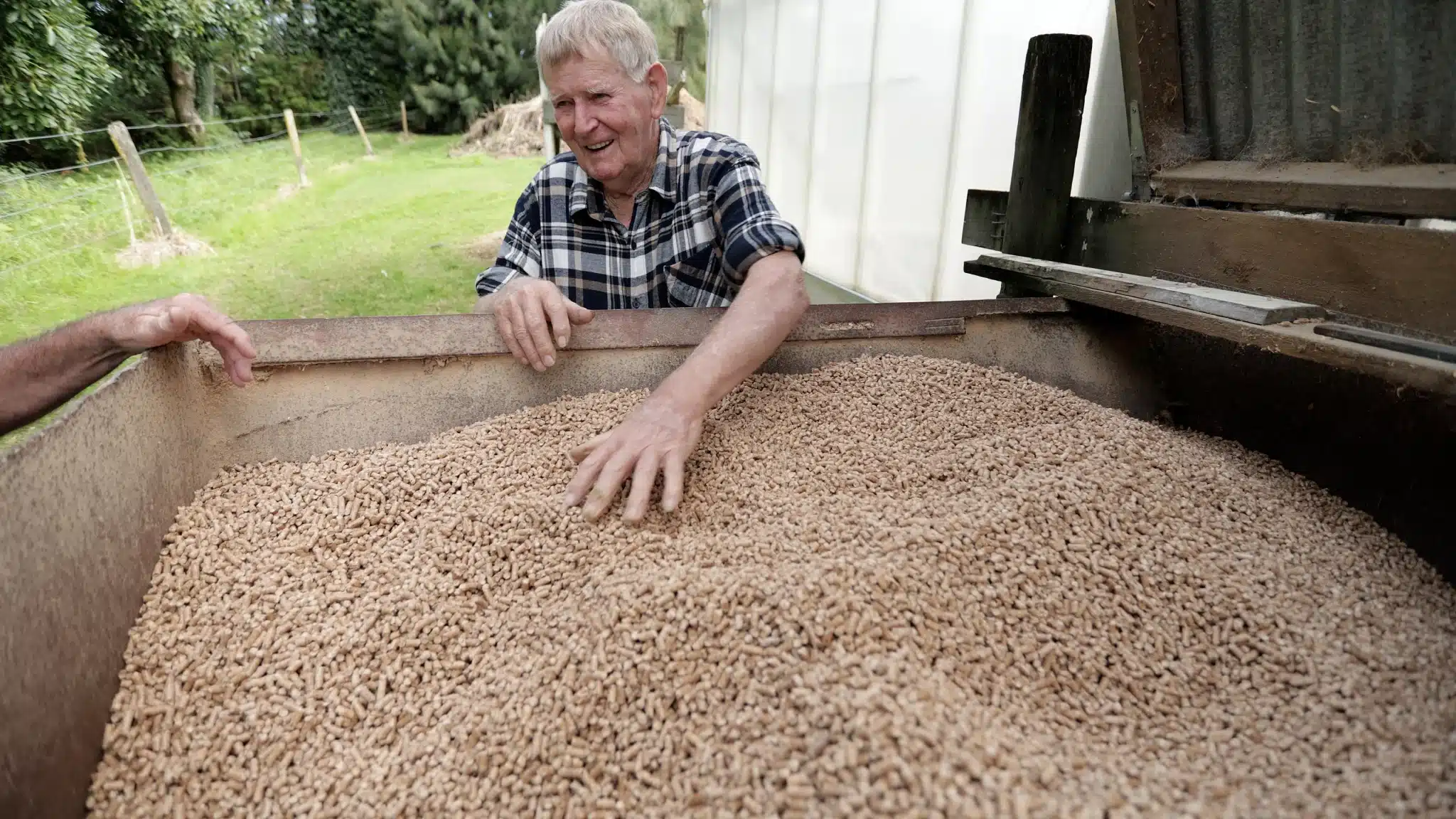
Ash Removal
Ash is part of the regular routine. Each morning, ash is raked out of the boiler. The amount is approximately half a small bucket per day. Nature’s Flame Wood pellets and combustion ash are certified as an organic input by BioGro New Zealand. The ash is rich in potassium and can be applied directly to agricultural land as a soil amendment or fertiliser.
Fuel Supply and Reliability
Fuel supply is a common concern for growers considering wood pellets. In this case, Ed has only run out of pellets once since 2011. Over winter, the system uses around 31 tonnes of wood pellets, a useful benchmark for growers sizing storage and planning deliveries.
“I just ring up Nature’s Flame and they have a truck dedicated to carting pellets. We have no trouble. Usually we ring on a Monday and they arrange a truck and trailer load to be delivered.” – Ed Paul, Te Puna grower, on the reliability of Nature’s Flame’s pellet supply
This statement is backed up by the long term supply contract that the Pauls have always had to support this, allowing them to focus on growing their valuable crops.
What Other NZ Growers Can Learn from This Setup
The biggest takeaway for other growers is that wood pellet greenhouse heating needs to be planned as a complete system.
The boiler itself is only one part of the setup. Growers also need to consider where pellets will be stored, whether a blower truck can access the site, how pellets will move from storage to the boiler, how fuel levels will be monitored and how ash will be handled.
For Ed and Lyn, the modified silo and tractor transfer work because they suit the layout of the property. A larger covered crop operation may need a more automated setup, larger storage capacity or a different fuel handling system.
While the Pauls were early adaptors and led the way with their kiwi innovation, the industry to support wood pellet fuelled boilers is mature, proven and competent.
Maintenance is also minimal once the system is properly set up, making wood pellet heating a practical option for crop growers without requiring a steep learning curve. With the right planning and supplier support, day-to-day operation is achievable within the existing capability of most growing businesses.
Greenhouse Heating Setup at a Glance
| Location | Te Puna, about 15 minutes north of Tauranga |
| Crop | Tomatoes |
| Greenhouse setup | Three greenhouses on site, with the winter house still operating |
| Winter house crop | 800 tomato plants |
| Winter production | Around 300 kg per week |
| Target temperature | Around 18 – 19 degrees C |
| Pellet use | Around 31 tonnes over winter |
| Boiler | 1985 Beacon coal boiler converted for wood pellets |
| Fuel storage | Modified silo |
| Fuel handling | Pellets transferred by tractor |
The Outcome
The strongest outcome is practicality. The setup has allowed a small greenhouse operation to keep producing through winter using a repurposed boiler and a wood pellet supply arrangement that fits the site.
Is Wood Pellet Greenhouse Heating Right for Your NZ Operation?
Ed and Lyn Paul’s Te Puna greenhouse shows how wood pellet heating can work in a practical covered crop setting.
These are all design elements that Nature’s Flame will be able to help you with.
For other growers, the main lesson is to plan the full system before making a switch. Storage, access, boiler location, fuel handling and daily operation all need to fit the site.
For larger properties, the same principles apply, only the design would need to be assessed around the site’s heat demand, layout, automation requirements and fuel storage capacity.
“If I was in their position, I’d try it and see what happens.” Ed Paul, Te Puna grower, on switching from coal to wood pellets
Talk to Nature’s Flame about what wood pellet greenhouse heating could look like for your NZ covered crop operation.